
Get Healthy!
- Posted April 22, 2026
Napping Linked To Higher Risk Of Death Among Seniors, Study Finds
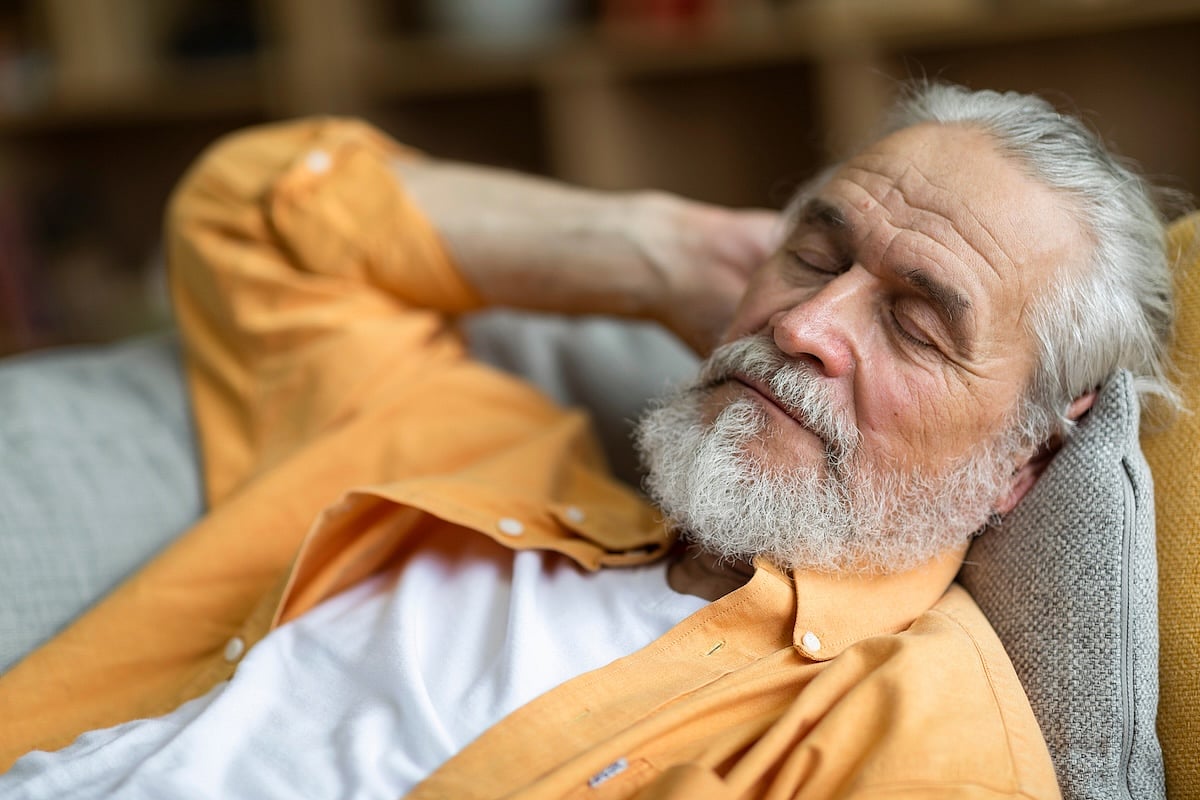
Grandpa snoozing on a recliner is an indelible memory for many families — but there could be a dark side to those daytime naps, a new study says.
Too much napping is linked to a higher risk of dying among older folks, researchers reported April 20 in JAMA Network Open.
Every extra nap and each additional hour of napping is linked to an ever-increasing risk of death, researchers found by tracking hundreds of seniors for nearly two decades.
Doctors can potentially use napping patterns to monitor seniors’ health, researchers said.
“Excessive napping later in life has been linked to neurodegeneration, cardiovascular diseases and even greater morbidity, but many of those findings rely on self-reported napping habits and leave out metrics like when and how regular those naps are,” said lead researcher Chenlu Gao, a research fellow in sleep medicine at Mass General Brigham in Boston.
“Our study is one of the first to show an association between objectively measured nap patterns and mortality and suggests there is immense clinical value in tracking napping patterns to catch health conditions early,” she said in a news release.
Between 20% and 60% of older adults take naps, researchers said in background notes.
To see whether naps can predict illness and death, researchers tracked 1,338 seniors for up to 19 years. The seniors wore wrist activity monitors for about 10 days when they entered the study, to measure their sleep and napping patterns.
Nearly all the participants (99%) took naps while wearing their activity monitors. Daytime naps were defined as sleeping between 9 a.m. and 7 p.m.
Results showed that:
Each additional hour of daytime napping was associated with a 13% higher risk of death.
Each extra nap per day increased risk of death by 7%.
Morning naps were tied to a 30% higher risk of death compared to afternoon naps.
"Morning napping is surprising," said Dr. Seymour Huberfeld, a pulmonary and sleep physician at Northwell Health in New Hyde Park, New York. "You had a good night's sleep. You should feel rested in the morning.”
Morning sleepiness should be evaluated, said Huberfeld, who reviewed the findings.
“If people are sleepy in the daytime, that's an issue that needs to be brought to a physician's attention," he said. "It needs an evaluation and needs a workup."
However, Huberfeld noted that not all naps should be considered a sign of poor health.
“Afternoon napping is actually both biologically and culturally somewhat normal. We all kind of feel a little drowsy after lunch. That's normal. Many cultures have siesta in the afternoon to take advantage of that,” Huberfeld said.
“Biologically, that is a natural time of inherent sleepiness. So, it is not that surprising that someone might feel a little tired in the afternoon and take a short nap,” he added.
The researchers noted that because this was an observational study, it couldn’t draw a direct cause-and-effect link between napping and death risk, but only show an association.
“Excessive napping is likely indicating underlying disease, chronic conditions, sleep disturbances or circadian dysregulation,” Gao said. “Now that we know there is a strong correlation between napping patterns and mortality rates, we can make the case to implement wearable daytime nap assessments to predict health conditions and prevent further decline.”
Huberfeld said the first thing he does when a patient complains of excessive daytime sleepiness is to check their prescriptions, to make sure their medications aren’t causing them to be drowsy.
After that, he starts looking for health problems that could be interfering with good sleep.
"There definitely could be a variety of health issues that could contribute to this. It could be cardiovascular disease, it could be underlying pulmonary disease, it could be undiagnosed sleep apnea, it could be polypharmacy [use of multiple medications] that’s contributing to this,” Huberfeld said.
More information
The National Council on Aging has more about napping and seniors.
SOURCES: Mass General Brigham, news release, April 20, 2026; Dr. Seymour Huberfeld, pulmonary and sleep physician, Northwell Health, New Hyde Park, New York


